Why Core Web Vitals Still Matter in 2025
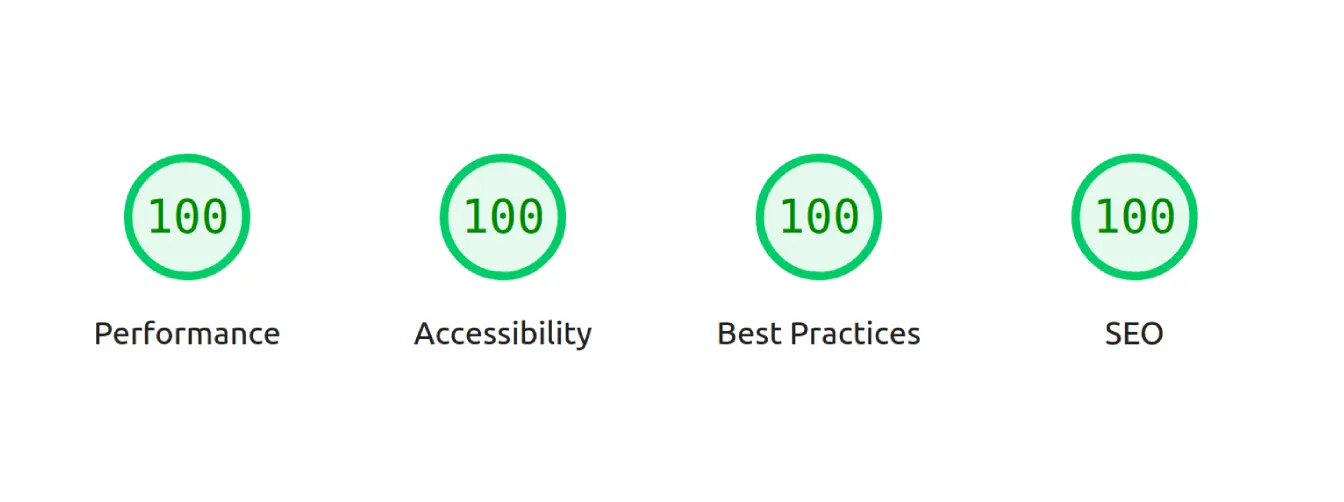
The Lighthouse 100 Myth
Most developers treat Lighthouse scores as a vanity metric. Run the audit, screenshot the green circles, move on. But Core Web Vitals — LCP, INP, and CLS — are ranking signals that directly affect where your pages land in search results.
The difference between a 75 and a 100 isn't academic. It's the difference between page 1 and page 2.
What Actually Moves the Needle
Largest Contentful Paint (LCP)
LCP measures when the largest visible element finishes rendering. The target is under 2.5 seconds, but I aim for under 1 second. The keys:
- Server response time: If your TTFB is over 200ms, fix that first. Edge functions, CDN caching, database query optimization.
- Image optimization: Use
next/imagewith propersizesattributes. Serve AVIF with WebP fallback. - Font loading:
font-display: swapis table stakes. Subset your fonts. Preload the critical ones. - Render-blocking resources: Inline critical CSS. Defer non-essential JavaScript.
Interaction to Next Paint (INP)
INP replaced FID in 2024 and it's harder to game. It measures responsiveness across all interactions, not just the first one.
// Bad: blocking the main thread
function handleClick() {
  const result = expensiveCalculation(data) // 200ms blocking
  setState(result)
}

// Better: yield to the browser
async function handleClick() {
  setState({ loading: true })
  await scheduler.yield()
  const result = expensiveCalculation(data)
  setState({ loading: false, result })
}
Cumulative Layout Shift (CLS)
CLS is the easiest to fix and the most neglected. Reserve space for async content:
- Set explicit
widthandheighton images and videos - Use
min-heighton containers that load dynamic content - Avoid injecting content above existing content after load
The Engineering Approach
I don't "optimize for Lighthouse." I engineer systems where performance is a natural outcome of good architecture:
- Server-render everything possible — HTML arrives ready to display
- Stream what you can — React Server Components + Suspense boundaries
- Lazy-load what's below the fold — but never above it
- Measure in the field — lab scores lie; RUM data doesn't
The sites I build consistently score 95-100 across all Core Web Vitals in production — not just in a Lighthouse audit run on localhost.
Bottom Line
Performance isn't a feature you bolt on. It's an architecture decision you make on day one. If your current site struggles with Core Web Vitals, the fix probably isn't a plugin — it's a rethink of how the page is assembled.
If you're dealing with performance issues that quick fixes haven't solved, let's talk.