When Developers are No Longer Needed (And Other Hilarious Lies)

Oh, the glorious future. A world where everyone can be an app developer! Where complex software systems are built not by seasoned engineers with years of training and experience, but by anyone with a keyboard and a burning desire to "see what happens." Welcome to the marvelous, terrifying, and utterly delusional world of "vibecoding."
The Rise of the "Vibe": From Syntax to Sentiment
We have entered the era of Vibecoding. Coined by tech luminaries like Andrej Karpathy, the term describes a shift where "English is the hottest new programming language." In this brave new world, you don't write code; you describe a feeling, a workflow, or a dream, and tools like Google AI Studio, GitHub Copilot, and Cursor manifest it into existence.
On paper, the benefits are intoxicating:
-
The Death of Boilerplate: Why spend three hours setting up a database schema and API routes when an AI can hallucinate a working version in three seconds?
-
Democratization (or "Enabling"): It lowers the barrier to entry so significantly that a marketing manager can build a functional internal dashboard over a long lunch.
-
The "Convenience Loop": If you're using a popular language like TypeScript, the AI is so good at predicting your next move that it feels like the code is writing itself. It's frictionless. It's fast. It's… a vibe.
For a professional developer, these tools are like a high-powered exoskeleton—they make you faster, stronger, and slightly more prone to accidentally crushing a load-bearing wall. But for the non-developer? These tools aren't an exoskeleton; they're a magic wand. And as every fairy tale teaches us, magic wands have a nasty habit of backfiring when you don't know the counter-spells.
The Great Illusion: "But It Runs!"
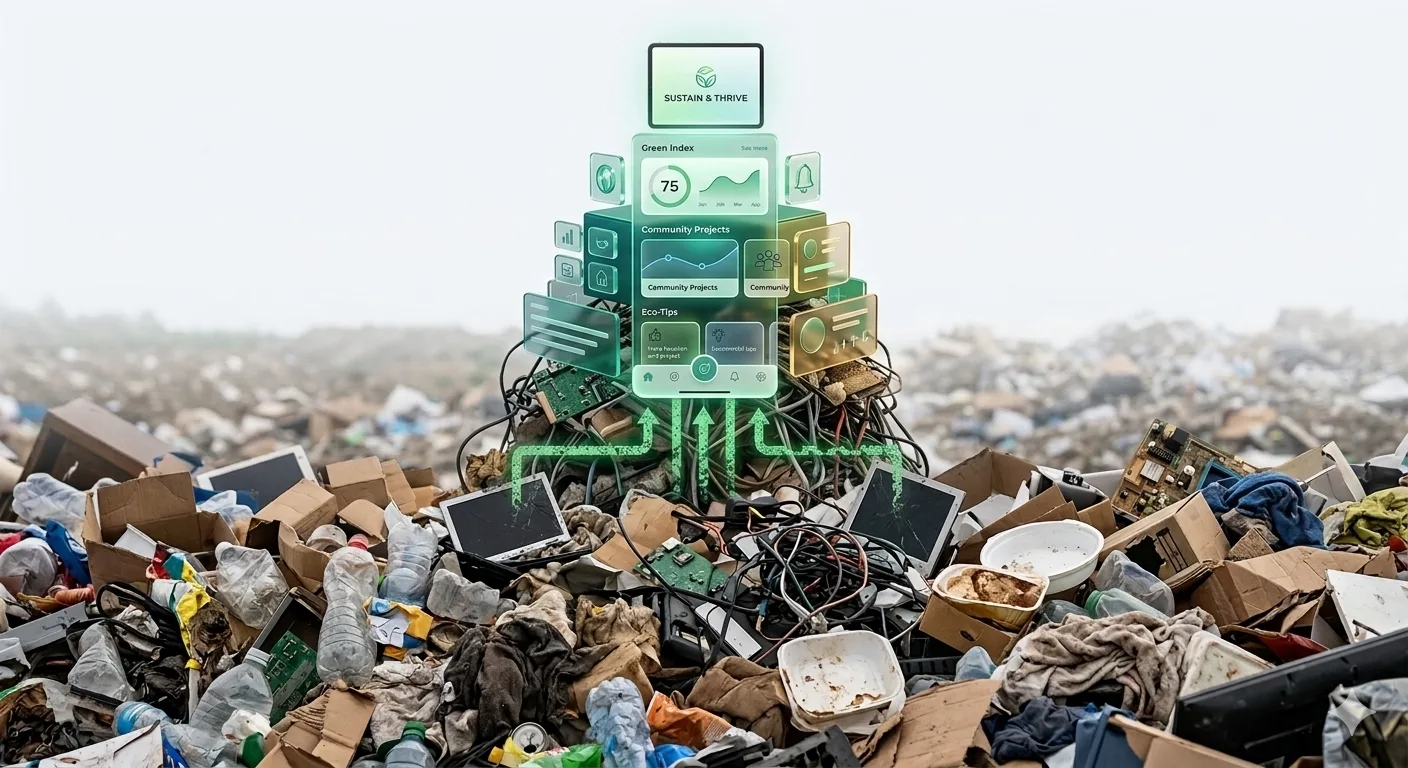
The danger of Google AI Studio isn't that it fails; it's that it succeeds too well at the wrong things. It provides a "just works" illusion.
When a non-developer "vibecodes" an app, they are steering by outcomes, not implementation. If the button turns blue and the data saves to a sheet, they declare victory. They don't see the 48% of AI-generated code that contains security vulnerabilities, or the fact that the "architecture" is essentially a pile of global variables screaming for mercy.
This leads us to the most expensive "cheap" project you'll ever start: The Handover.
The "Vibe-Coding" Phenomenon: A Disaster in the Making
For those fortunate enough to be unfamiliar with the term, "vibecoding" is the practice of attempting to develop software based solely on intuition, gut feeling, and a complete lack of technical understanding. It's the equivalent of trying to perform open-heart surgery because you watched a couple of episodes of Grey's Anatomy. And it's becoming alarmingly popular, thanks in no part to tools like Google AI Studio.
Don't get me wrong, AI is a powerful tool. In the hands of someone who actually knows what they're doing, it can be a valuable asset. But in the hands of a non-developer? It's like giving a loaded gun to a toddler and telling them to "go play."
The Google AI Studio Deception: Why You're Not an Engineer
So, you've spent an afternoon playing around in Google AI Studio. You've dragged a few blocks, typed a couple of prompts, and voilà! You have an app. You feel like a tech mogul. Zuckerberg, watch your back.
Except… you don't actually have an app. You have a fragile, poorly constructed digital Rube Goldberg machine. You have code that works, but you have no idea why it works (or more importantly, why it will inevitably break).
You've built a house on a foundation of sand, and you're inviting the whole world to move in.
When the Vibe Turns Sour: The Handover from Hell
But the true tragedy, the moment where the comedy of errors turns into a Greek tragedy, is when the non-developer realization sets in: they can't actually maintain this monstrosity they've created.
So, they call in a "true developer." You know, someone who spent four years (at least) studying things like data structures, algorithms, and software design patterns. Someone who has written code that has actually been used by real people without causing a cataclysmic failure.
And the conversation inevitably goes something like this:
Non-Developer: "Hey, I built this cool app in Google AI Studio. I just need you to 'take over' and add a few features. It's almost done!"
Developer: "Okay, let's take a look. Gasp Oh, sweet summer child. This isn't code. This is a collection of random function calls held together by digital duct tape and the hopes and dreams of a person who thinks 'compiling' is what happens to laundry."
Non-Developer: "What do you mean? It works! I clicked 'run' and it did something!"
Developer: "Yes, it did 'something.' But it's also about as secure as a screen door on a submarine. It's not scalable. It's not maintainable. In fact, if you look at the code the wrong way, it might actually start bleeding."
Non-Developer: "But I used AI! The AI said it was fine!"
Developer: "The AI also doesn't have a conscience, or a sense of professional responsibility. It doesn't have to fix this mess. I do."
The Harsh Reality Check: You Need Developers. Seriously.
Here's the inconvenient truth that vibecoders and Google AI Studio enthusiasts refuse to acknowledge: building software is hard. It requires a deep understanding of complex systems, a meticulous attention to detail, and a commitment to rigorous testing and security.
It's not something you can just "vibe" your way through.
So, please, for the love of all that is binary, if you have no background in software development, do yourself (and the entire tech community) a favor: stay away from tools you don't understand. And if you do decide to ignore this advice and build something that looks like it was created by a drunken monkey with access to a keyboard, don't be surprised when a real developer laughs in your face and quotes you a price that could buy a small island to fix it.
Because "taking over" your AI-generated dumpster fire isn't a minor tweak. It's an exorcism. And exorcists don't come cheap.